Case Study 3 · Mr M.R. · Norwood 4

Norwood 4 Hair Transplant in Sydney: 3,628 Grafts to Restore the Hairline, Frontotemporal Peaks and Mid-Scalp Using Micro FUE and the Direct Implanter Technique (DIT)

Performed by Dr Yusuf Assem (Dr Y Assem), Principal Hair Transplant Doctor, Hair Restoration Doctors, Five Dock, Sydney

3,628

Grafts in one day

Norwood 4

Male pattern hair loss

7 days

Time off work

12 months

Result documented after surgery

Case at a glance

PatientMr M.R., 44-year-old man
DiagnosisAndrogenetic alopecia (male pattern hair loss), Norwood 4
Hair and skinStraight black hair, Fitzpatrick skin type III
Hair loss historyRelatively stable for the past five years
Treatment areasHairline, frontotemporal peaks, mid-frontal tuft, mid-scalp
TechniqueMicro FUE extraction (0.65 mm punch, 0.9 mm external diameter) with the Direct Implanter Technique (DIT)
Grafts3,628: 820 single-hair, 1,898 two-hair and 910 three-or-more-hair grafts
ProcedureOne day, every surgical step performed by Dr Yusuf Assem
Time off work7 days
ComplicationsNone
Follow-up shown10 days and 12 months

Summary

Mr M.R., a 44-year-old man with Norwood 4 androgenetic alopecia (male pattern hair loss), had a hair transplant with Dr Yusuf Assem at Hair Restoration Doctors in Five Dock, Sydney. Dr Assem planned a large single session to restore the frontotemporal peaks, create a natural hairline with a dense mid-frontal tuft, and restore coverage to the mid-scalp. In a one-day procedure, he transplanted 3,628 grafts using micro FUE and the Direct Implanter Technique (DIT). There were no complications. Mr M.R. took seven days off work, and at 12 months he has a natural, dense result across the hairline, temples and mid-scalp.

The patient

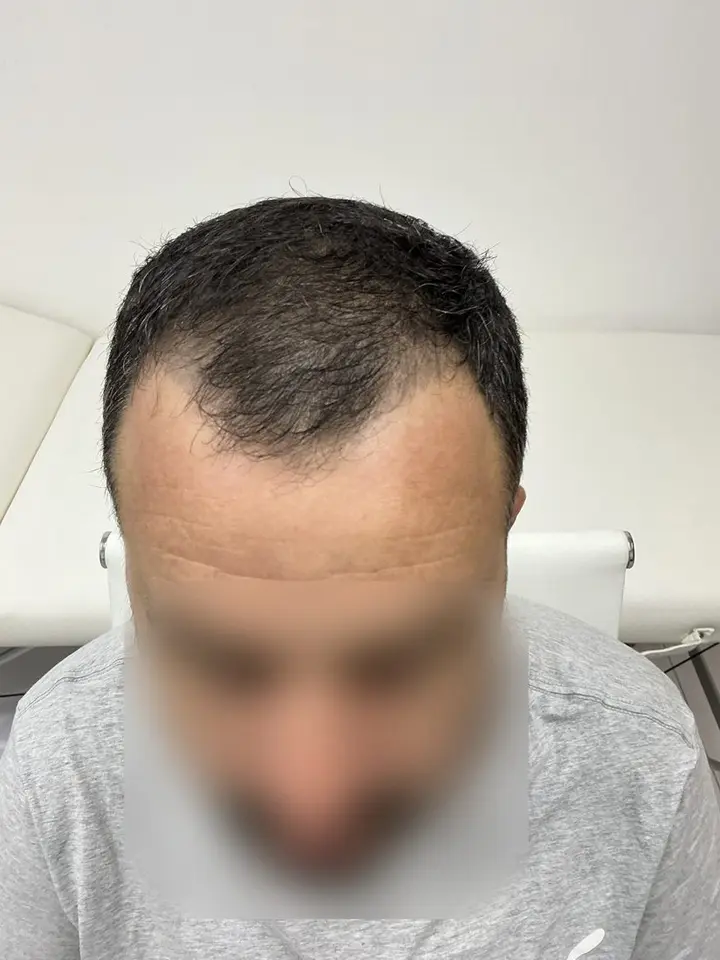
Before: Norwood 4 androgenetic alopecia (male pattern hair loss), assessed by Dr Yusuf Assem

Mr M.R. is 44, with straight black hair and Fitzpatrick type III skin. His hair loss followed a typical male pattern: the frontotemporal peaks had receded and the hair had thinned through the front and mid-scalp, which is classified as Norwood 4. The aim of surgery was to restore his frontotemporal peaks with a very natural hairline, and to rebuild density through the front and mid-scalp.

Why he was a good candidate

Mr M.R. was a straightforward surgical case. Three factors made him a good candidate for hair transplant surgery:

  • Stable hair loss. His hair loss had been relatively stable for five years. This makes it easier to plan a hairline that will still look right as he ages.
  • Straightforward extraction. His donor area at the back and sides of the scalp allowed easy extraction with micro FUE.
  • A commitment to medical therapy. He was commenced on medical therapy to help preserve his existing, non-transplanted hair, and he is happy to continue it long term to optimise his result.

Medical therapy matters because a hair transplant does not stop androgenetic alopecia. The transplanted hair comes from the donor area, which is resistant to the hormone (DHT) behind pattern hair loss. The patient’s own hair in the treated areas, however, can continue to thin without treatment.

Planning: a large single session with four goals

Dr Assem planned a large transplant in one session with four goals:

  1. Restore the frontotemporal peaks so that the temples frame the face.
  2. Create a very natural hairline, hand-drawn with a soft, irregular edge rather than a straight line.
  3. Build a dense mid-frontal tuft, the central area behind the hairline that gives the front of the hair its density and shape.
  4. Restore coverage to the mid-scalp.
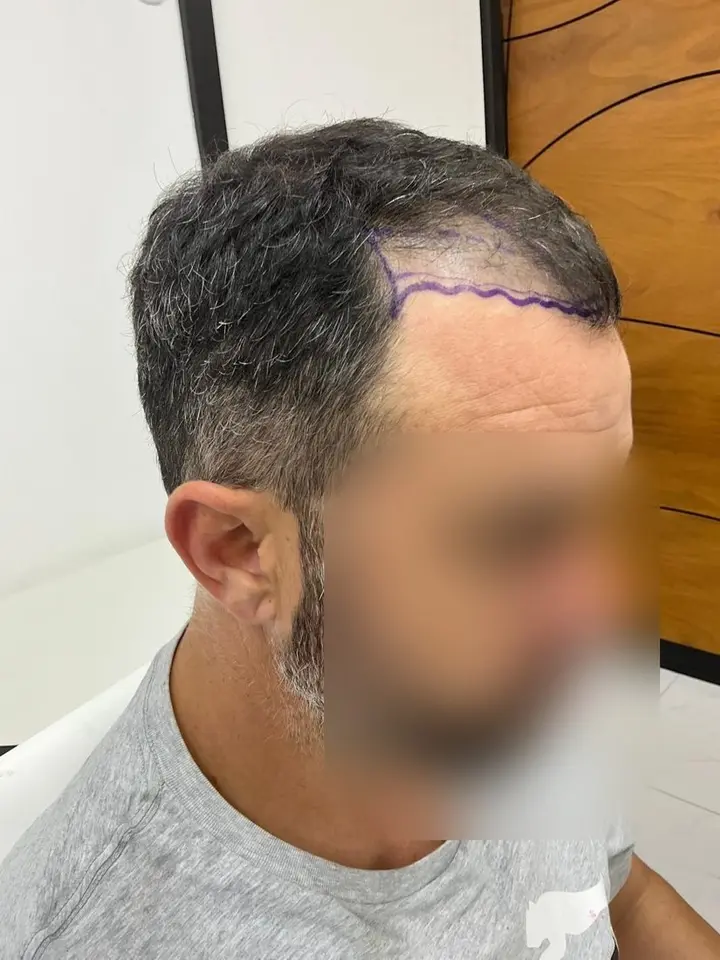
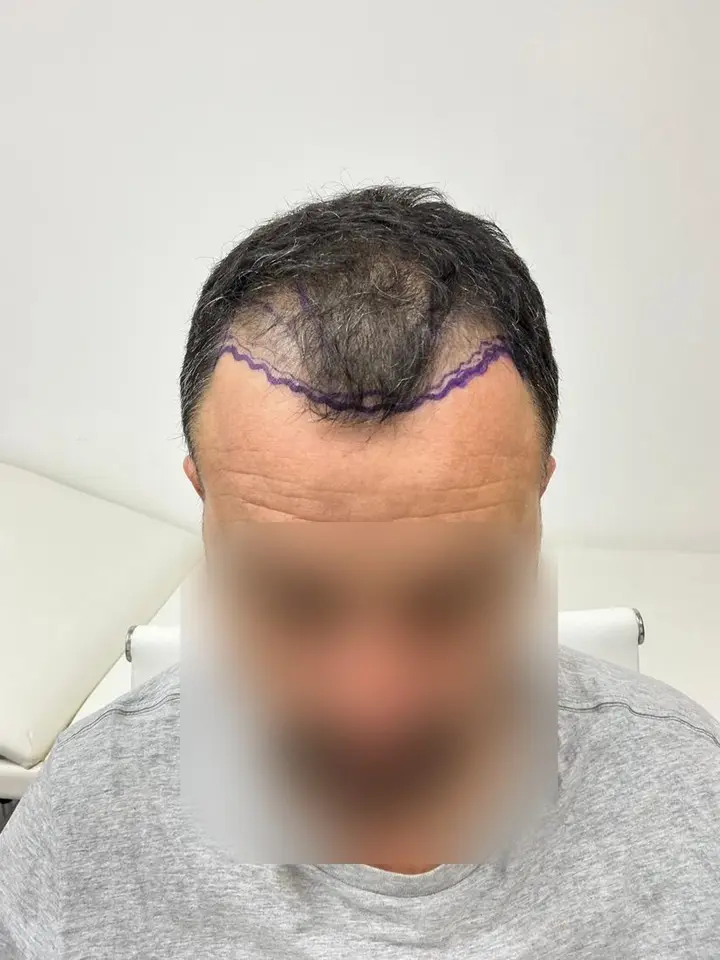
Planning: Dr Yusuf Assem hand-draws an irregular, natural hairline
Planning: right frontotemporal peak and hairline design
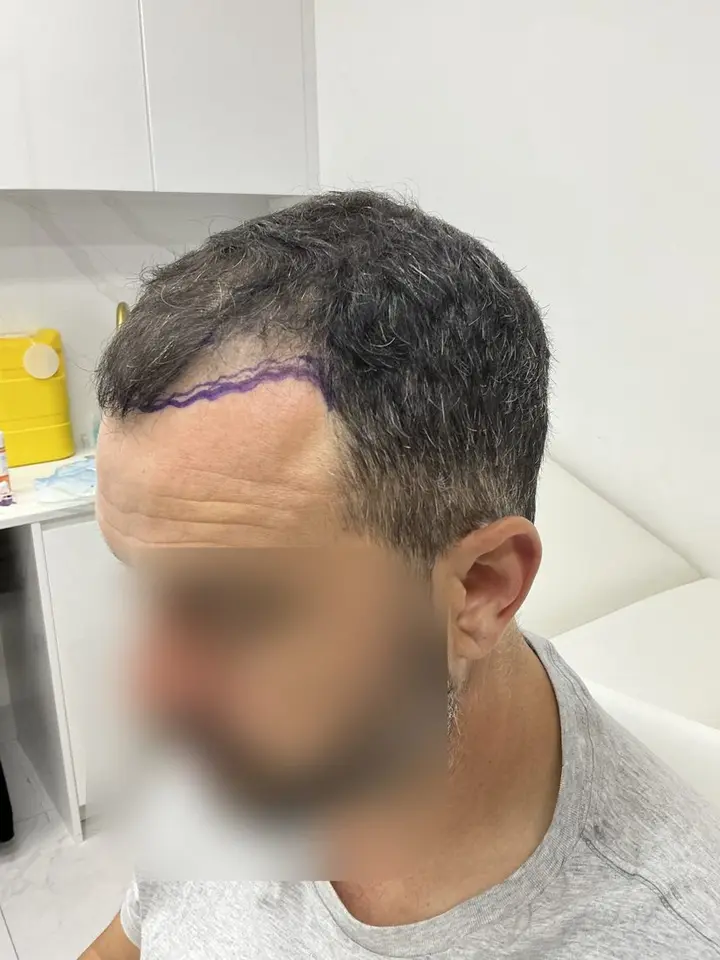
Planning: left frontotemporal peak designed to frame the face
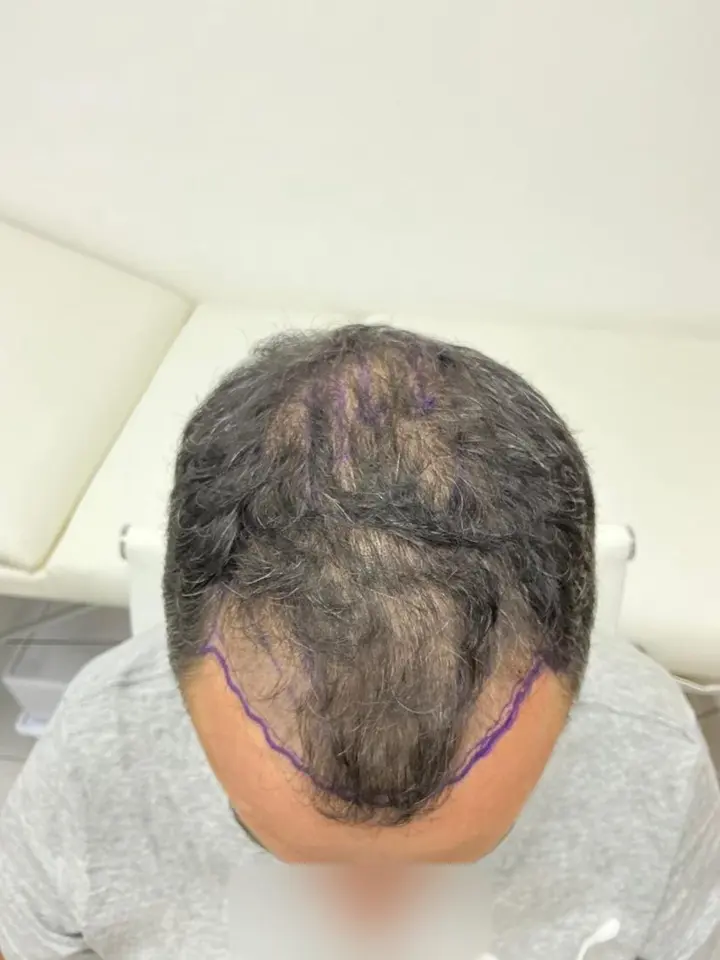
Planning: hairline, mid-frontal tuft and mid-scalp zones mapped before the shave
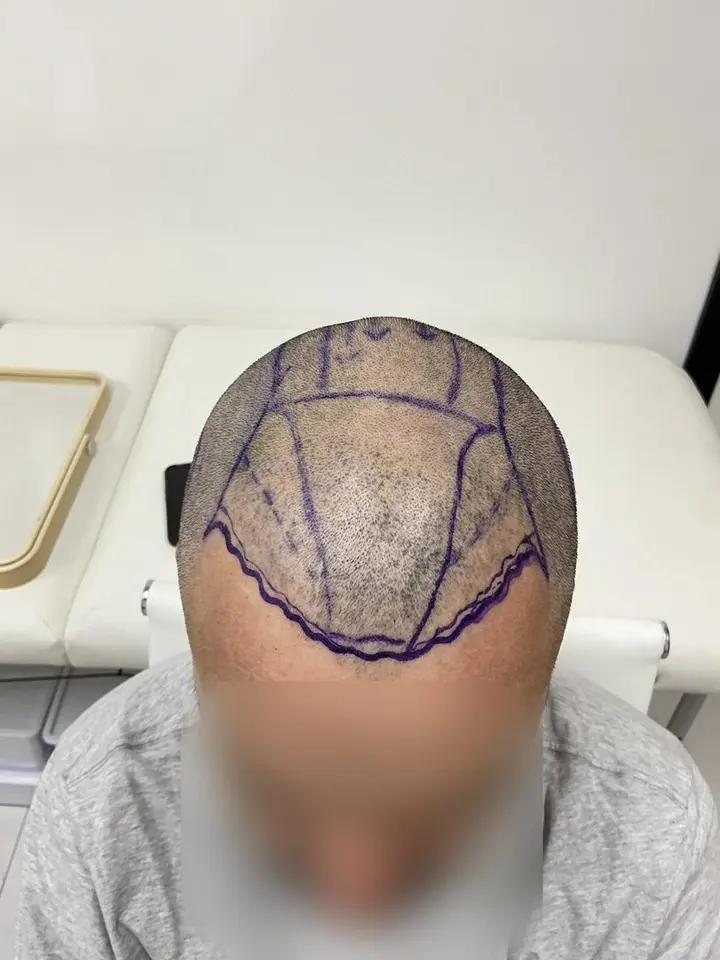
Pre-surgery: shaved scalp with the hairline and recipient zones marked

The procedure: micro FUE and the Direct Implanter Technique (DIT)

Dr Assem performed every surgical step himself, in a single day.

Extraction with micro FUE

He extracted the grafts from the donor area using micro FUE with a 0.65 mm punch (0.9 mm external diameter). Extraction was straightforward. Fine punches like this keep each extraction scar under 1 mm.

Grafts placed by hair count

He then sorted the grafts by the number of hairs in each and placed each type where it gives the most natural result:

Graft typeGraftsWhere they were placed
Single-hair grafts820The front edge of the hairline and the frontotemporal peaks, where softness matters most
Two-hair grafts1,898Behind the front edge, to build the transition zone
Three-or-more-hair grafts910The mid-frontal tuft and mid-scalp, for density
Total3,628

This arrangement copies how hair grows naturally: fine single hairs at the front, with density building gradually behind them. Together the grafts contain more than 7,300 hairs.

Implantation with the Direct Implanter Technique (DIT)

Dr Assem placed the grafts using the Direct Implanter Technique (DIT). This hybrid approach combines sharp implanters, which place grafts directly, with blunt implanters, which place grafts into pre-made incisions. It gives close control over the angle, direction and depth of every graft, which is essential at the hairline and frontotemporal peaks, and it is designed to minimise graft handling.

Wound dressing

After surgery, Dr Assem applied a dedicated wound dressing to support healing of the donor and recipient areas.

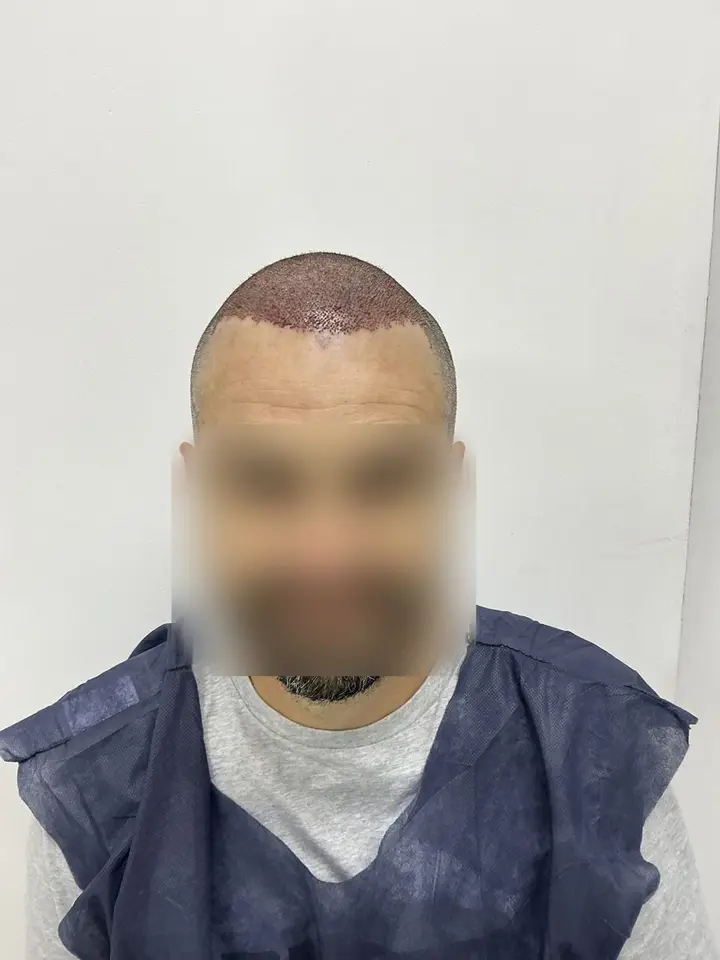
Immediately after surgery: 3,628 grafts placed with the Direct Implanter Technique (DIT)
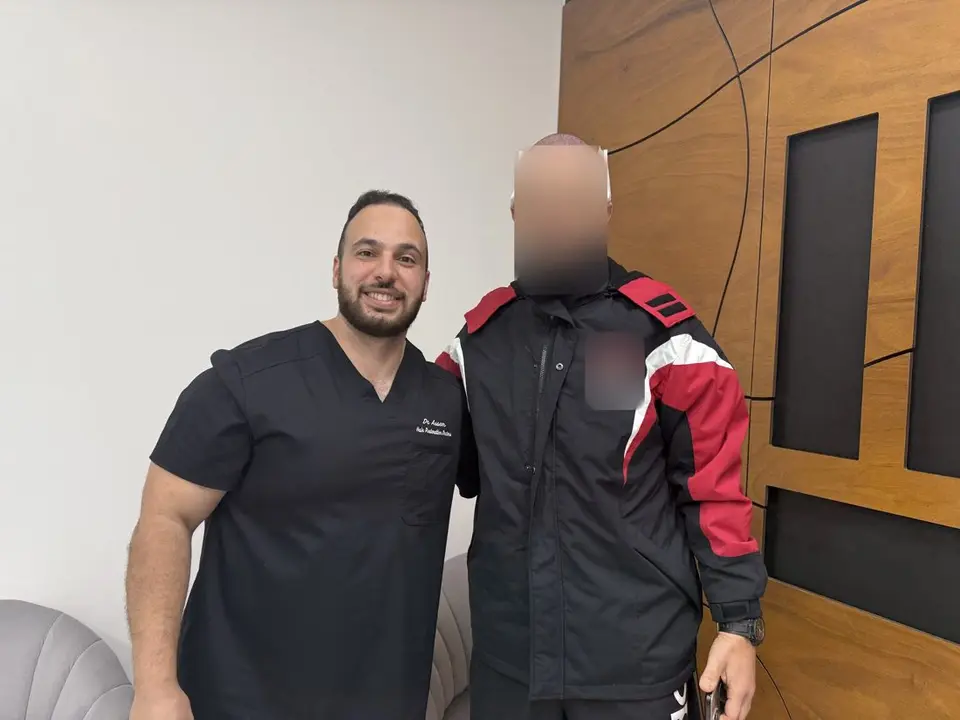
Post-surgery: Dr Yusuf Assem with Mr M.R. after his one-day procedure

Recovery timeline

Time after surgeryWhat happened
Day 1One-day procedure; wound dressing applied
7 daysReturned to work after seven days off
10 daysScabs cleared; the grafted and donor areas had healed very well
3–4 monthsThe transplanted hairs shed over the following three to four months, a normal, expected stage
6 monthsNew growth clearly visible and looking strong across the treated areas
12 monthsNatural, dense result across the hairline, peaks, tuft and mid-scalp
10 days after: the scabs have cleared and the grafted areas have healed well

What about scarring?

Every hair transplant leaves some scarring, whatever technique is used. With micro FUE and a 0.65 mm punch, each extraction scar is under 1 mm and spread across the donor area. Scars this small are well disguised by the surrounding hair and are usually not visible even with a number half or number one clipper cut.

The result: 12 months after surgery

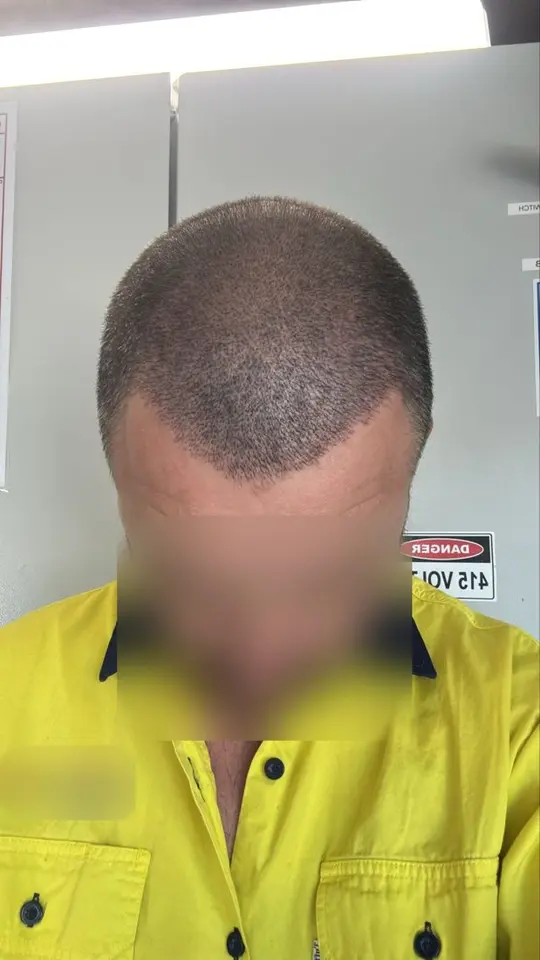
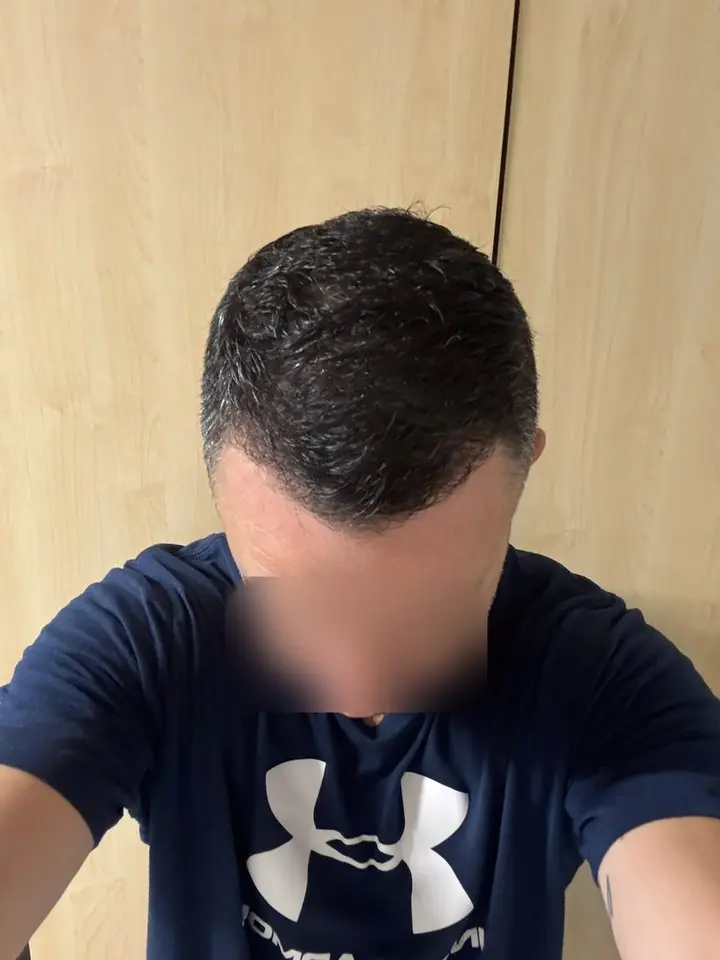
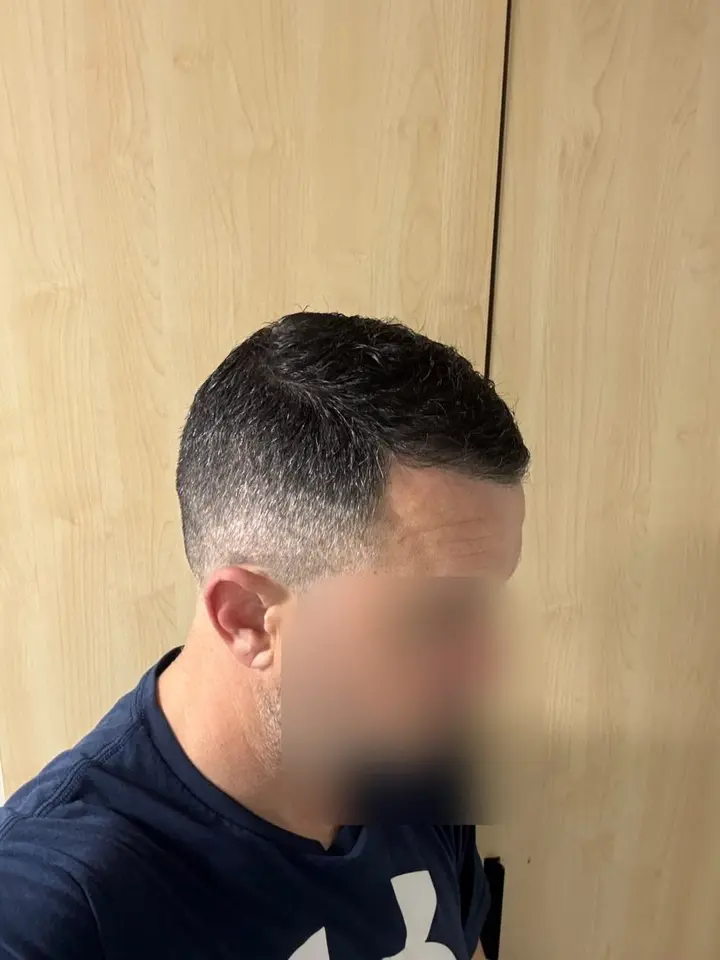
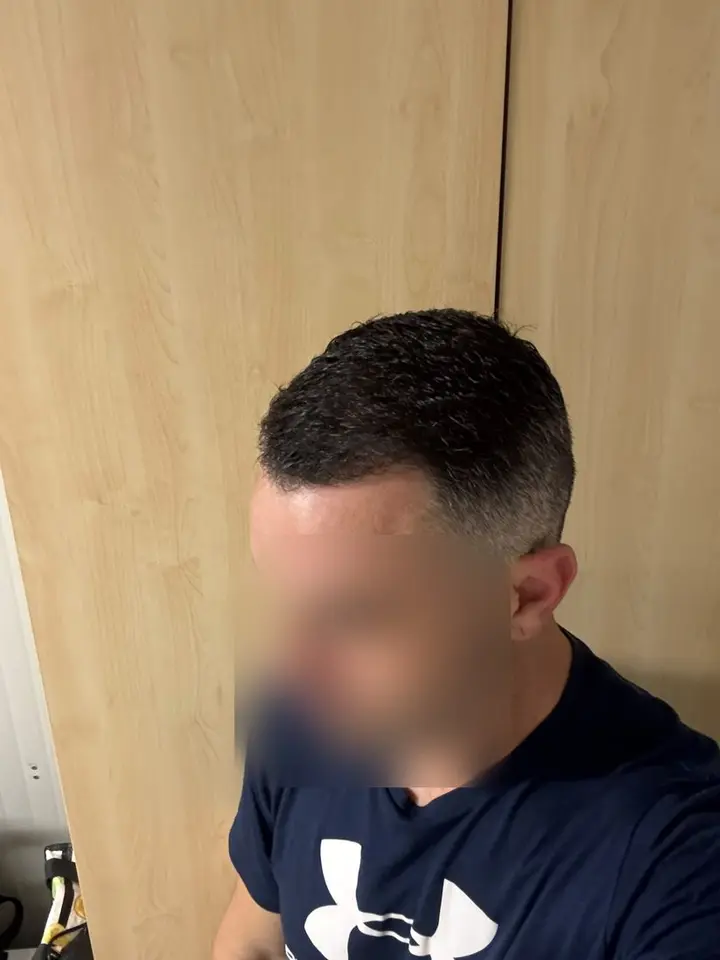
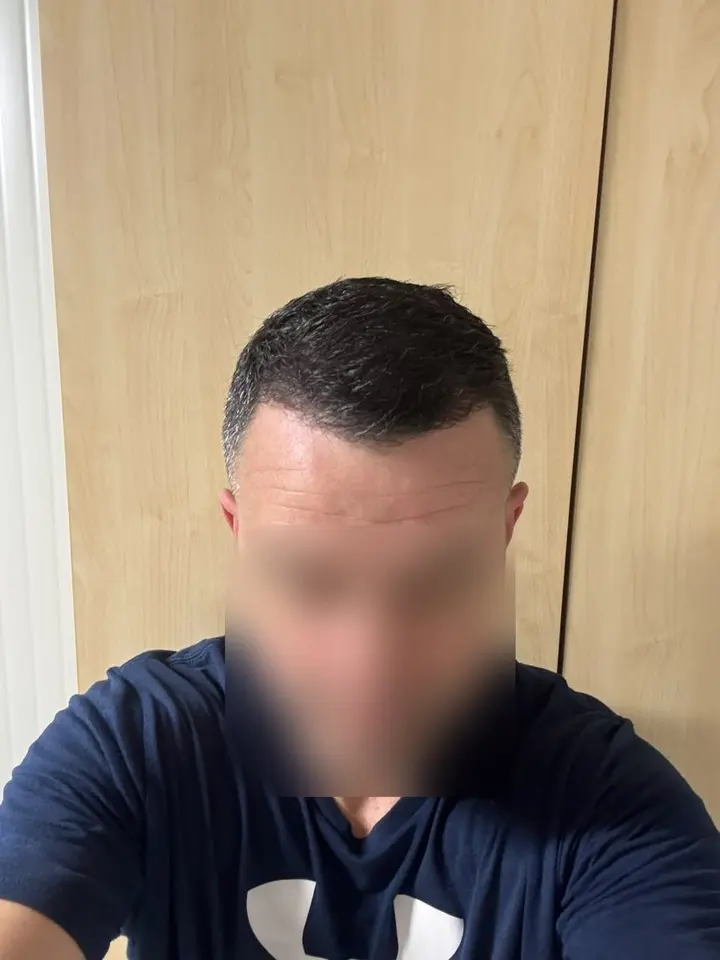
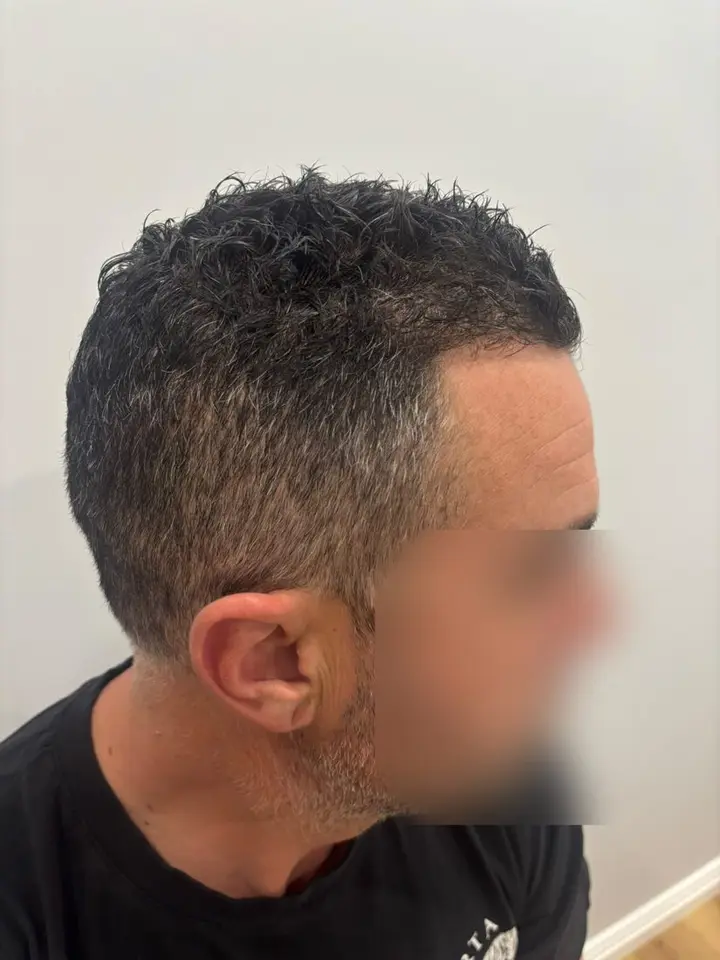
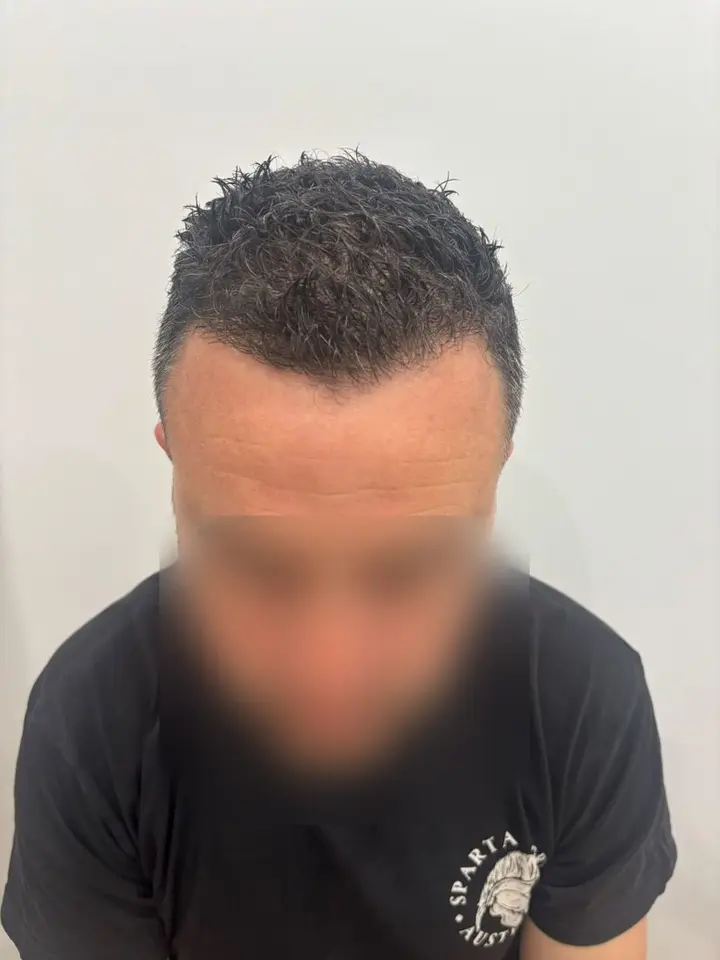
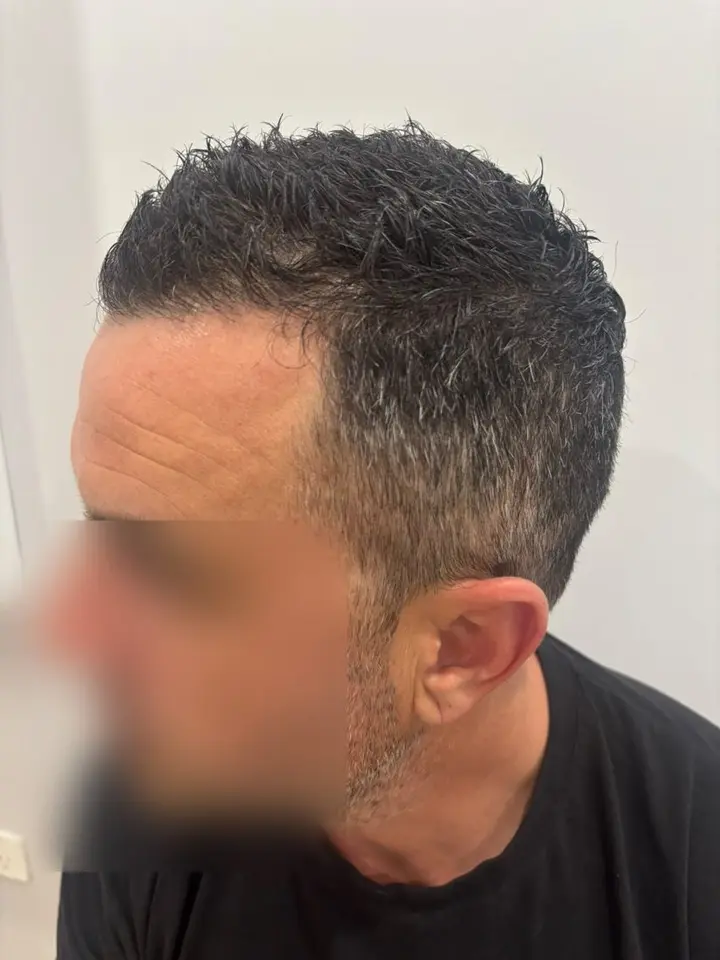
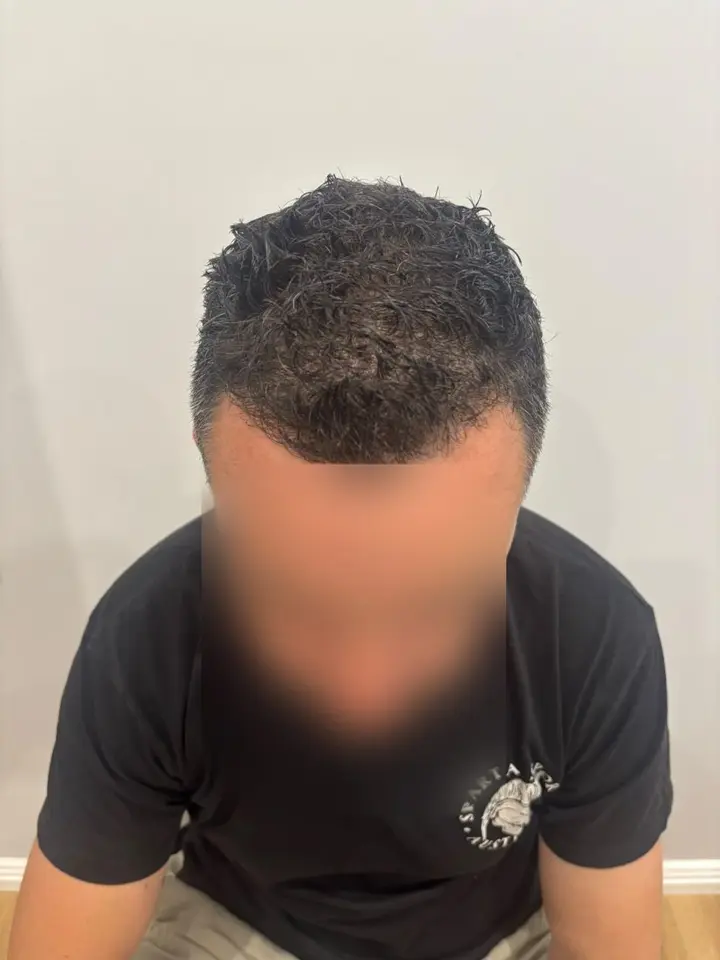
At 12 months, Mr M.R. has a natural hairline, restored frontotemporal peaks, a dense mid-frontal tuft and restored coverage across the mid-scalp. The single-hair grafts give a soft front edge that blends into his own hair, even when it is cut short. Seen from the side, the frontotemporal peaks now frame his face. Dr Assem and the team are very pleased with the overall outcome.

12 months after: coverage restored across the frontal scalp and mid-scalp
12 months after: right frontotemporal peak restored
12 months after: left frontotemporal peak restored, blending into the patient's own hair
12 months after: natural hairline framing the face

12-month review at Hair Restoration Doctors

12-month review: right side
12-month review: restored hairline and mid-frontal tuft
12-month review: left frontotemporal peak and hairline
12-month review: frontal and mid-scalp density

Before and after: Norwood 4 hair transplant, 12 months

Before: Norwood 4 androgenetic alopecia
12 months after: restored hairline and mid-frontal tuft

The outcomes shown are only relevant for this patient. Hair growth and the final results vary between patients.

Key takeaways from this Norwood 4 case

Frequently asked questions

It varies with the size of the area, the donor supply and the density wanted. For Mr M.R., a 44-year-old with Norwood 4 hair loss, Dr Yusuf Assem transplanted 3,628 grafts in one day to restore the hairline, frontotemporal peaks, mid-frontal tuft and mid-scalp. Graft numbers are worked out individually at consultation.
Good candidates usually have stable hair loss, a healthy donor area and realistic expectations, and are willing to use medical therapy to protect their existing hair. Mr M.R.’s hair loss had been stable for five years, which made him a straightforward surgical case.

Micro FUE is follicular unit extraction using very fine punches. Dr Assem used a 0.65 mm punch (0.9 mm external diameter) in this case, which keeps each extraction scar under 1 mm.

All hair transplant surgery leaves some scarring. With micro FUE, the scars are under 1 mm, spread across the donor area and usually not visible even with a number half or number one clipper cut.

The Direct Implanter Technique (DIT) places each graft into the scalp with a fine implanter pen. At Hair Restoration Doctors, Dr Assem uses a hybrid approach that combines sharp implanters for direct placement with blunt implanters into pre-made incisions. It takes longer and needs a larger surgical team, but it gives close control of angle and direction and is designed to minimise graft handling.

Mr M.R. took seven days off work, and his scalp had healed well by day 10. Recovery varies between patients, and Dr Assem gives every patient individual aftercare instructions.

The transplanted hairs usually shed over the following three to four months. New growth is typically visible by six months, and the result is assessed at 12 months, as shown in this case.

Often, yes. A transplant does not stop androgenetic alopecia in the patient’s existing hair. Mr M.R. continues medical therapy long term to help preserve his existing hair and optimise his result. Whether medical therapy suits you is discussed with your doctor.

Dr Yusuf Assem (Dr Y Assem), a medical doctor, trichologist and the Principal Hair Transplant Doctor at Hair Restoration Doctors in Five Dock, Sydney, performs every surgical step of each hair transplant himself.

About the doctor

Dr Yusuf Assem

Dr Yusuf Assem is a medical doctor and trichologist, and the Principal Hair Transplant Doctor at Hair Restoration Doctors in Five Dock, Sydney. He performs every surgical step of each hair transplant himself, using FUE and the Direct Implanter Technique (DIT), and treats cases ranging from straightforward Norwood 4 hair loss to complex Norwood 7 cases.

  • BMed MD (Distinction & Honours)
  • Fellow of the Royal Australian College of General Practitioners (FRACGP)
  • Member of the International Society of Hair Restoration Surgery (ISHRS)
  • Trichologist and lecturer for the IAT
  • Conjoint Lecturer, UNSW Medical Faculty

AHPRA MED0002137762

Book a consultation

Hair Restoration Doctors – Dr Yusuf Assem
49 Queens Rd, Five Dock NSW

Email: info@hairrestorationdoctors.com.au

Also consulting by appointment at:
176 Windsor Rd, Winston Hills NSW 2153 (with Dr Zubair Hasan, ENT Surgeon)
Level 1, 456 St Kilda Rd, Melbourne VIC 3004 (with Dr Michael O’Gorman, Aesthetic Doctor & Private GP)

Disclaimer. The outcomes shown are only relevant for this patient. Hair growth and the final results vary between patients. Always consult a qualified Doctor. Any surgical or invasive procedure carries risks. Before proceeding, you should seek a second opinion from an appropriately qualified health practitioner.

About “DHI” and the Direct Implanter Technique (DIT). “DHI” (Direct Hair Implantation) is a trade mark of DHI Global Medical Group. Hair Restoration Doctors is not affiliated with DHI Global Medical Group and does not offer the DHI-branded procedure. Many patients, however, use “DHI” as a general term for hair transplants where grafts are placed with an implanter pen, a hand-held device that loads a graft into a fine needle and inserts it into the scalp. Implanter pens, first known as Choi implanters, are used by surgeons worldwide and appear in the medical literature under several names. At Hair Restoration Doctors in Five Dock, Sydney, Dr Yusuf Assem uses the direct implanter technique (DIT), a hybrid approach that combines sharp implanters for direct placement with blunt implanters into pre-made incisions. DIT takes longer and needs a larger surgical team, but it is designed to minimise graft handling, which is why it is Dr Assem’s preferred technique. Results vary between patients, and the right approach for you is discussed at your consultation.