At Hair Restoration Doctors, Dr Assem regularly sees patients seeking corrective hair transplant surgery following previous procedures. Unfortunately, many have experienced significant donor overharvesting, leaving a limited remaining donor supply. In these cases, donor preservation becomes even more critical, as every remaining graft is valuable. Repair procedures are often more complex than primary surgeries and require meticulous planning, advanced microsurgical techniques, and careful management of the donor area to achieve the best possible long-term outcome. The goal is not only to improve the appearance of the previous transplant, but also to preserve and strategically utilise the remaining donor resources for any future hair restoration needs.
Overview
Every patient has a unique pattern of hair loss and donor area quality. A patients safe donor limit differs based on safe size, hair calibre, density and thickness.
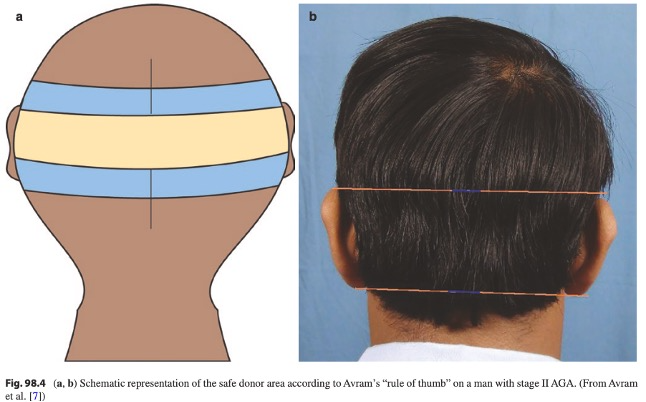
One of the most important factors in a hair transplant is the preservation of your donor area quality. The donor area is a finite resource that can’t be replenished, and it holds the key to your long-term graft reserve. Preserving it ensures a natural appearance and prevents a “moth-eaten” look from overharvesting.
This is why Dr Assem is meticulous in assessing every patient before surgery. At Hair Restoration Doctors, we utilise advanced trichoscopy, detailed photographic analysis, and a comprehensive medical assessment to evaluate donor capacity, hair characteristics, and future hair loss progression. This allows us to accurately calculate the safest number of grafts that can be harvested while preserving the donor area and achieving the best possible long-term result.
Why Preservation Matters
“Your donor area is the most valuable asset in your battle against hair loss. Once used, it can never be replaced. This is why every graft matters. Success is not measured by how many grafts are extracted, but by their survival, artistic placement, and achieving the best possible result with the fewest grafts.” – Dr Yusuf Assem
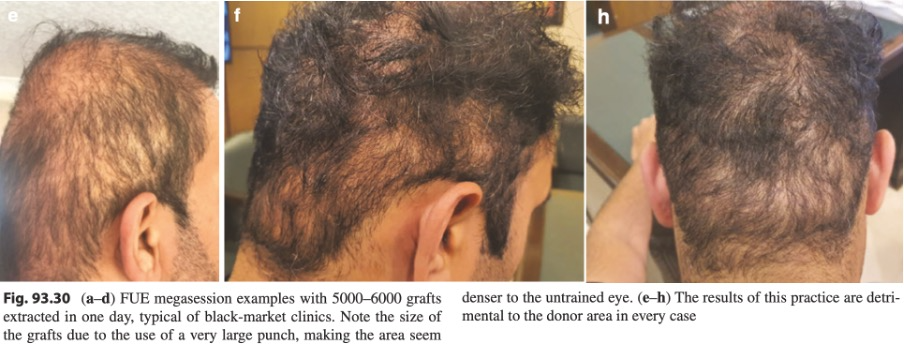
The most common issue we see in technician or black market clinics is overharvesting, causing permanently scarred & disfigured donor areas. This happens when too many grafts are taken, or when clinics use poor techniques and equipment. Overharvesting is irreversible, often resulting in permanent scarring that can only be masked by tattooing.
At Hair Restoration Doctors, patient education is a priority. We believe patients should understand that hair loss is a progressive condition and that a hair transplant does not stop future hair loss. Ongoing treatment, such as medication and adjunctive therapies, is often required to maintain and optimise results. Many patients will require more than one hair transplant procedure during their lifetime, depending on the severity and progression of their hair loss, age, genetics, and adherence to treatment. This is why donor preservation is so important. If the donor area is overharvested or damaged, future surgical options may become limited or impossible when they are needed most. Our philosophy is to create the best possible result today while protecting your options for tomorrow.
Donor Area Grades
The number of grafts that can be safely extracted depends on the quality of the donor area. We generally categorize donor areas into four grades:
- Grade 1 (Poor): Minimal donor reserve; only a small number of grafts can be taken without causing significant damage.
- Grade 2 (Below Average): Lower density and a smaller donor area; requires a conservative approach to preserve the donor.
- Grade 3 (Above Average): Easier to harvest a larger number of grafts safely within the safe donor area.
- Grade 4 (Strong): Dense and robust donor area; allows for a significant number of grafts with a good reserve for future procedures.
Why an In-Person Assessment Matters
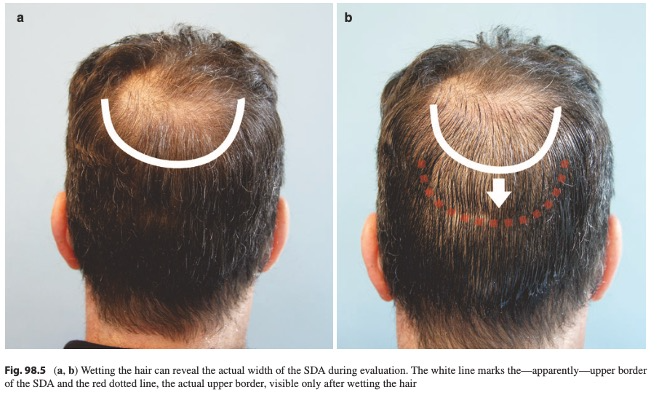
The number of grafts that can be safely harvested depends on the grade of your donor area. Dr Assem will assess density, hair calibre, and overall donor health, while ensuring grafts are only taken from the true safe donor area, not regions that may miniaturise over time.
Individualised Approach
Because every patient’s hair loss pattern and donor quality are unique, it’s important not to compare yourself to others. Your treatment plan should be tailored specifically to your unique situation.
How we preserve your donor area
- State of the art oscillating surgical drill –UGRAFT Zeus & Devroye WAW is used.
- Our Doctor performs the surgical extraction, not delegated to technicians.
- Conservative safe grafts numbers extracted, meticulously evenly distributed.
- Regenerative therapies pre and post extraction to optimise recovery and healing.
Donor area & Over-harvesting Short Informative Videos
- https://www.youtube.com/shorts/JkADOTpI-5Y
- https://www.youtube.com/watch?v=K2PiDDm9grM
- https://www.youtube.com/watch?v=Y6eYDCgi8xY
- https://www.youtube.com/watch?v=RIrXdOwBYPM&t=212s
Examples of overharvesting